Large photo for a headstone — how it looks and how to order it

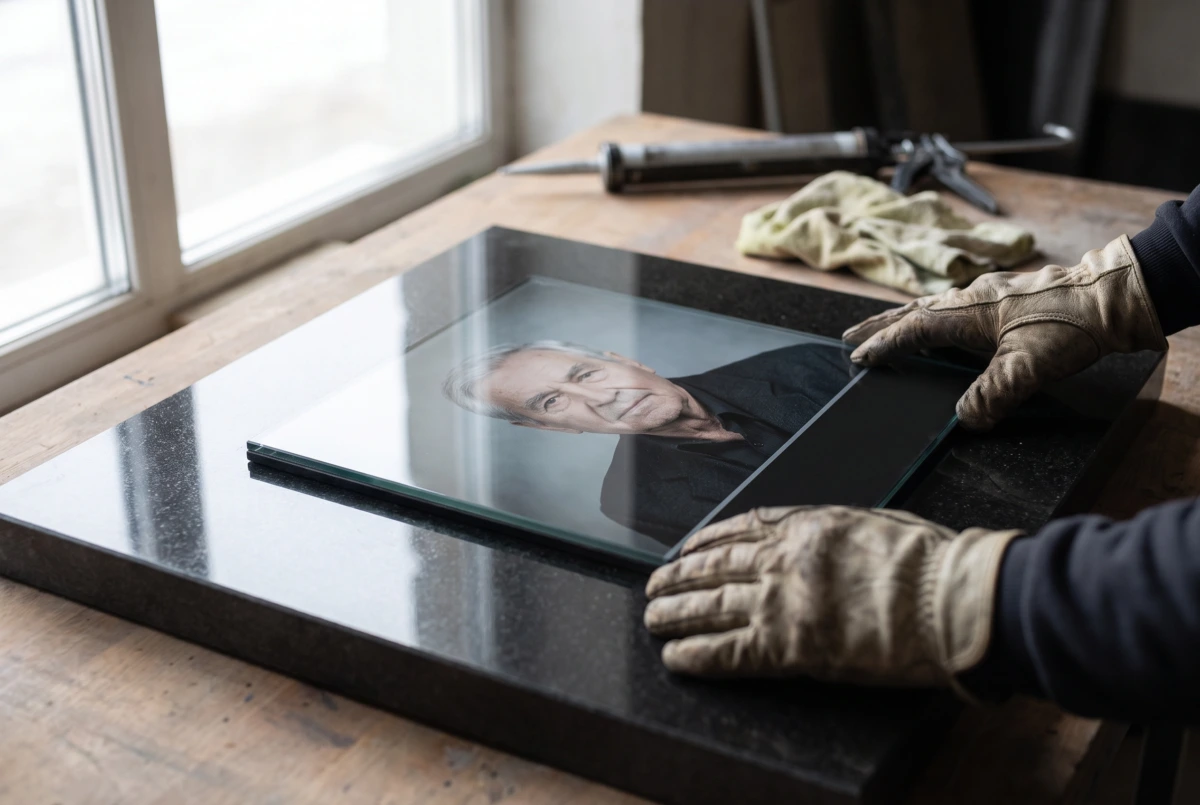
colour photo for memorial fitted onto black granite headstone in stonemason's yard
Guide
Large photo for a headstone — how it looks and how to order it
A glass panel carrying the portrait and the inscription instead of a small oval. The designs, the sizes, the photograph you need and how it is fitted.

Published 10 October 20269 min read
Contents

A large photo for a headstone is a glass panel carrying both the portrait and the inscription. It covers the upright face of the memorial, or it is set into the base. Instead of a small oval on the stone, the family gets a portrait the size of a picture — in colour or in black and white, with the name and the dates fired into the same sheet of glass.

This guide goes through it in order: what the panel looks like, the four designs and the sizes, what photograph you need to send us so that a large portrait comes out well, how it is fitted and how long it takes. It is written for families and for memorial masons alike, because with a large format both sides have to agree things before the order goes in. If you are still choosing between materials, start with headstone photo: porcelain, crystal or tempered glass.

What a large headstone photo looks like

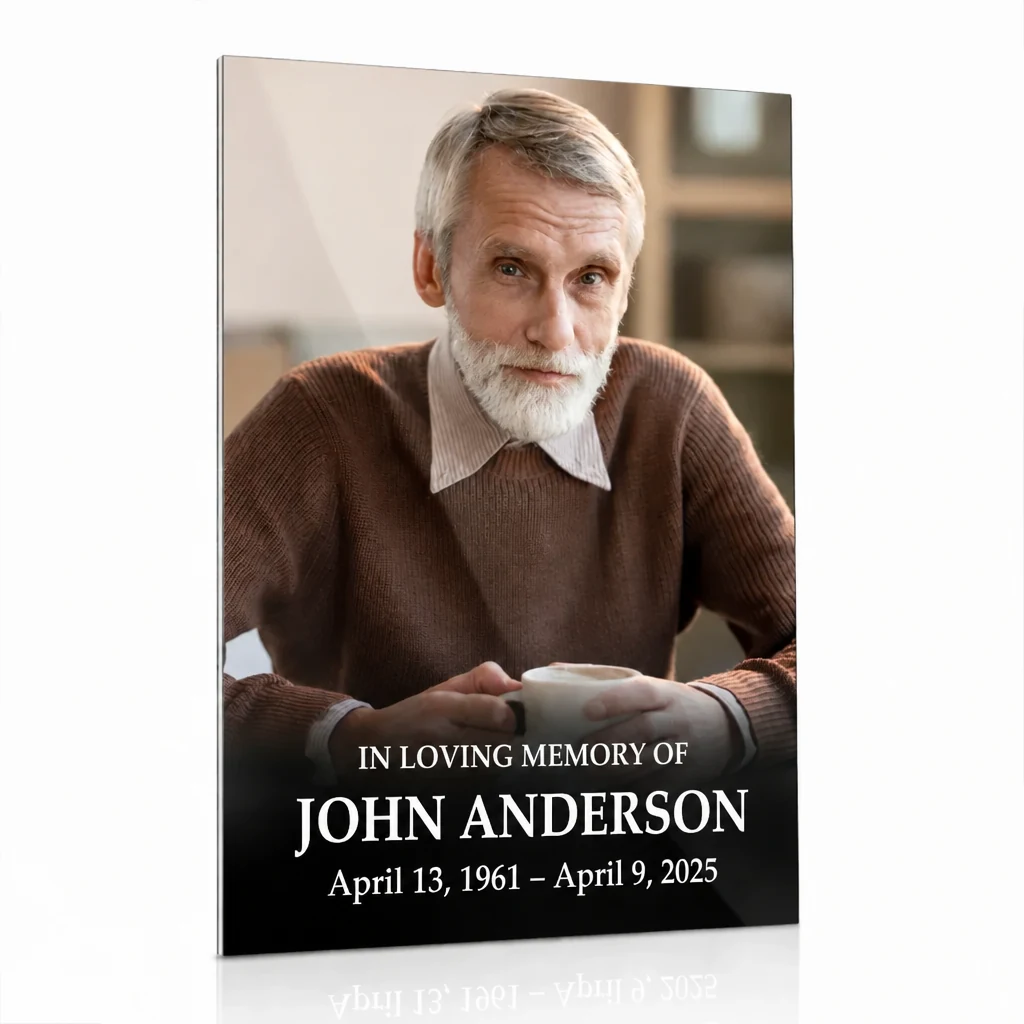
It is a sheet of tempered glass with the portrait fired into it. A darker band runs below the picture carrying the inscription — usually the name and the dates. The whole thing is one piece: there is no separate plaque for the details and no separate photograph.

  • Colour or black and white — both cost the same.
  • A waist-up crop or head and shoulders, composed to the proportions of the panel.
  • The inscription is inside the glass, not applied to it and not cut into the stone.
  • Two ways of using it: bonded to the face of the slab, or set into a prepared recess in the base.

The image is made in the fired ceramic process: it goes through a kiln, and we back it with a second layer of glass and a lamination. The portrait is protected from both sides and has nothing to fade from.

The four designs

There are four ready-made layouts. They differ in colour treatment and composition; the sizes are the same for all of them:

Glass panel for a headstone with a photograph and the name of the deceased
A colour portrait with the inscription on a dark band at the foot of the panel.
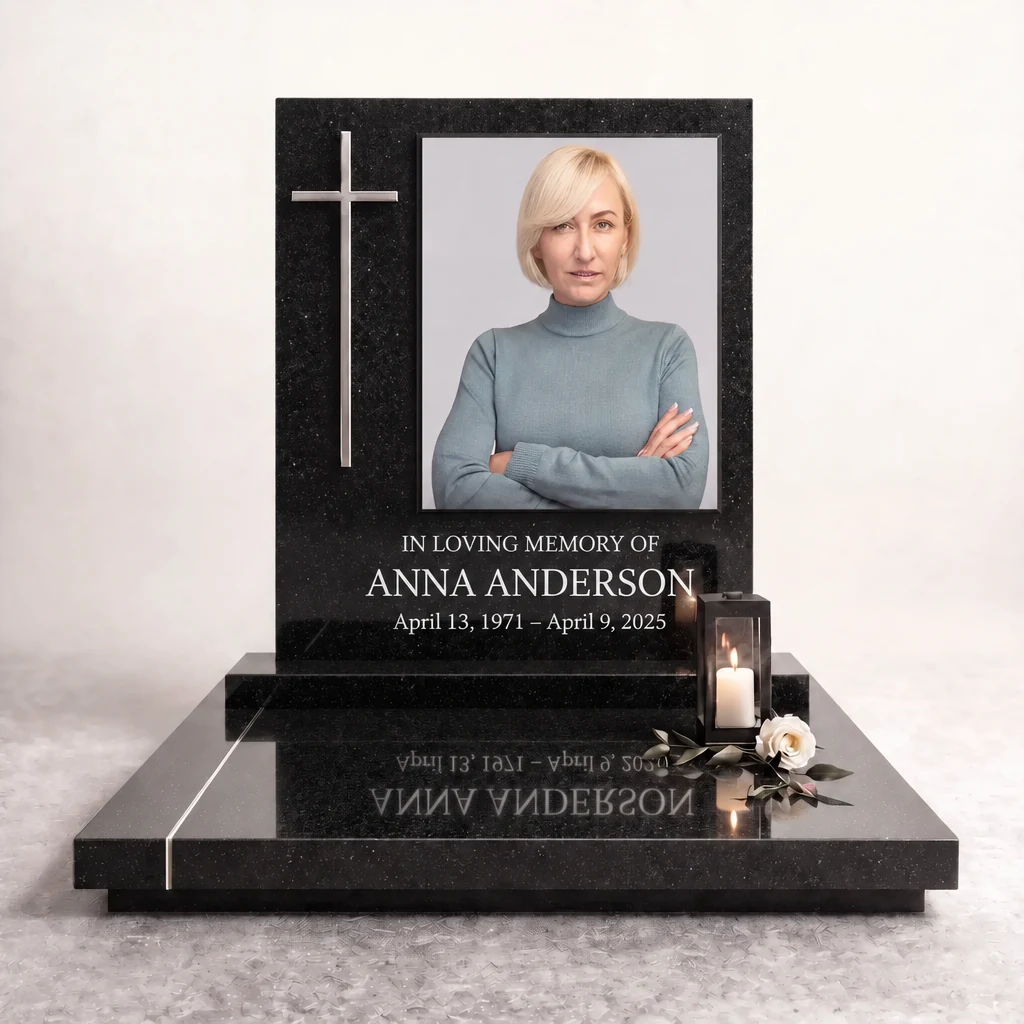
Single modern headstone with a large memorial photo of a woman
A colour panel set into the upright face of a single memorial.
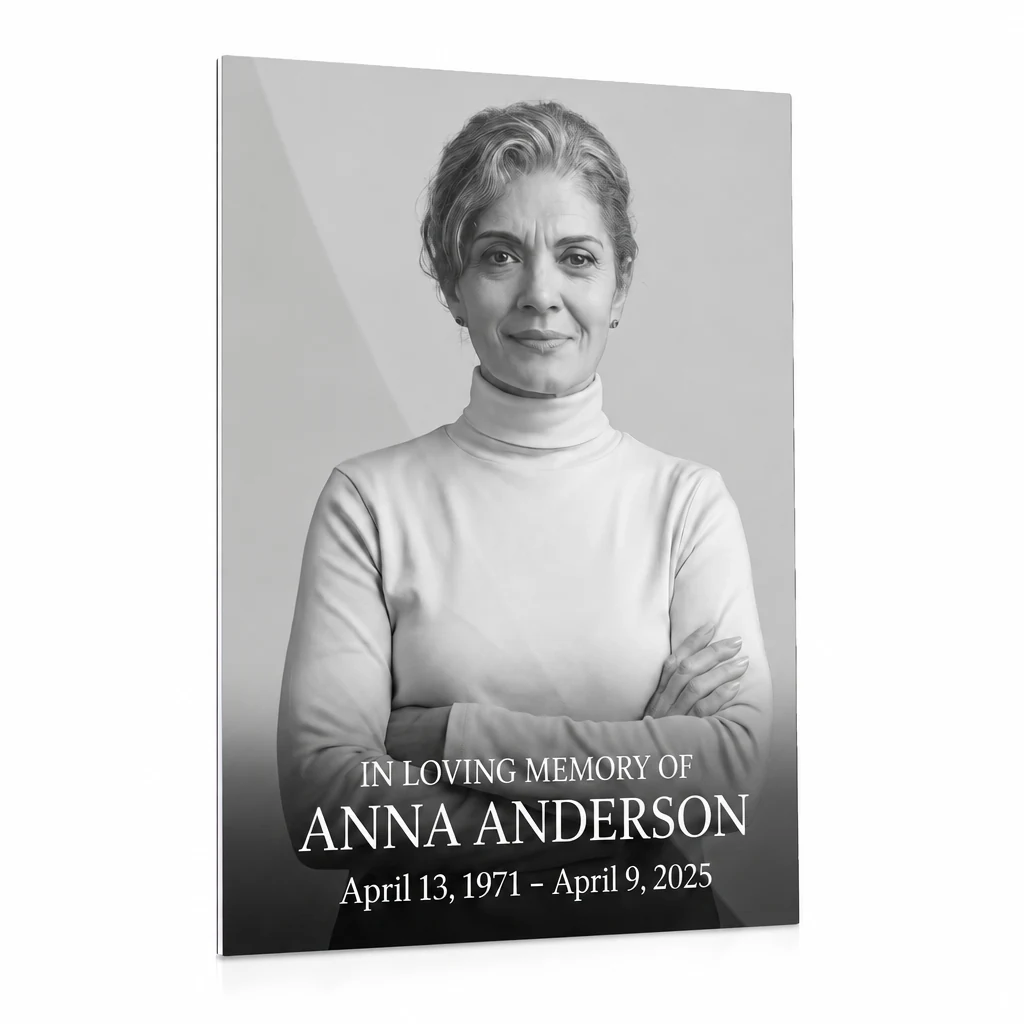
Large black and white memorial photo with the name and dates of the deceased
The black and white version for a woman — the same layout, a quieter tonality.
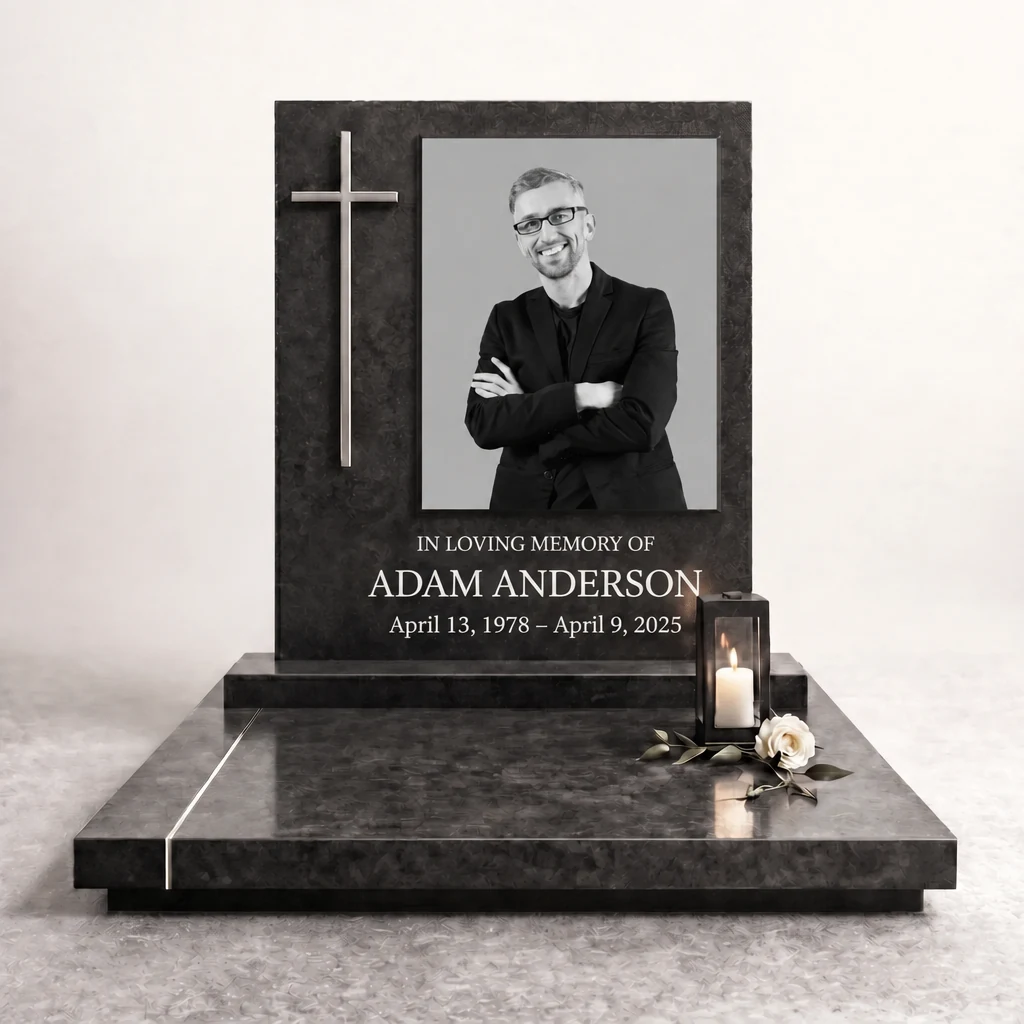
Single headstone with a large black and white memorial photo of a man
The black and white version for a man, on a memorial with a cross.
  • Colour portrait with the inscription on a dark band — the most frequently ordered layout.
  • Colour portrait in an upright composition, proportioned for a single memorial.
  • Black and white for a woman — the same layout in a quieter tonality.
  • Black and white for a man, the masculine version of the same arrangement.

The design does not tie your hands: the crop and the placing of the inscription are set to the particular photograph and the particular memorial. All four are in the large memorial photos category, and the smaller sizes are in photos for headstones.

Sizes and glass thickness

Five standard formats, each available in two thicknesses of glass:

FormatRoughlyWhere it usually goes
20×30 cm8″×12″a narrow upright, or a panel in the base
30×40 cm12″×16″a narrower upright slab
40×50 cm16″×20″the usual choice for a single memorial
50×70 cm20″×28″a large upright face
60×90 cm24″×35″a full-height portrait on a contemporary memorial

Which thickness. Eight millimetres is enough when the panel is bonded to the face of the slab and its whole back rests against the stone. Twenty millimetres is for a panel set into a recess or standing as an element in its own right — it is stiffer and shows a visible polished edge.

Need a size other than these five? We make panels to measure: give us the height and the width and we will price it. If you are thinking of a whole slab with the portrait and a full inscription, look at the memorial plaques as well.

When a large format is the right choice

A large panel is not a “better” version of a small photograph; it is a different design decision. It works when:

  • the memorial is contemporary, with a large plain face and nothing on it to hold the eye,
  • the family wants a portrait rather than a medallion — at 40×50 cm and above the face reads from several metres away,
  • the memorial has a recess or a base prepared for a glass panel,
  • the inscription is meant to be part of the picture, with no separate lettering cut into the stone,
  • it is a single grave where one portrait carries the whole memorial.

Leave the large format alone when the memorial is small or heavily carved, when the slab already has a long inscription, or when the burial ground limits what may be fixed to a memorial. In the UK that last point matters: many churchyards do not allow photographic panels at all, and council cemeteries often set a maximum size. Check before you promise anything to the family.

The photograph you need to send us

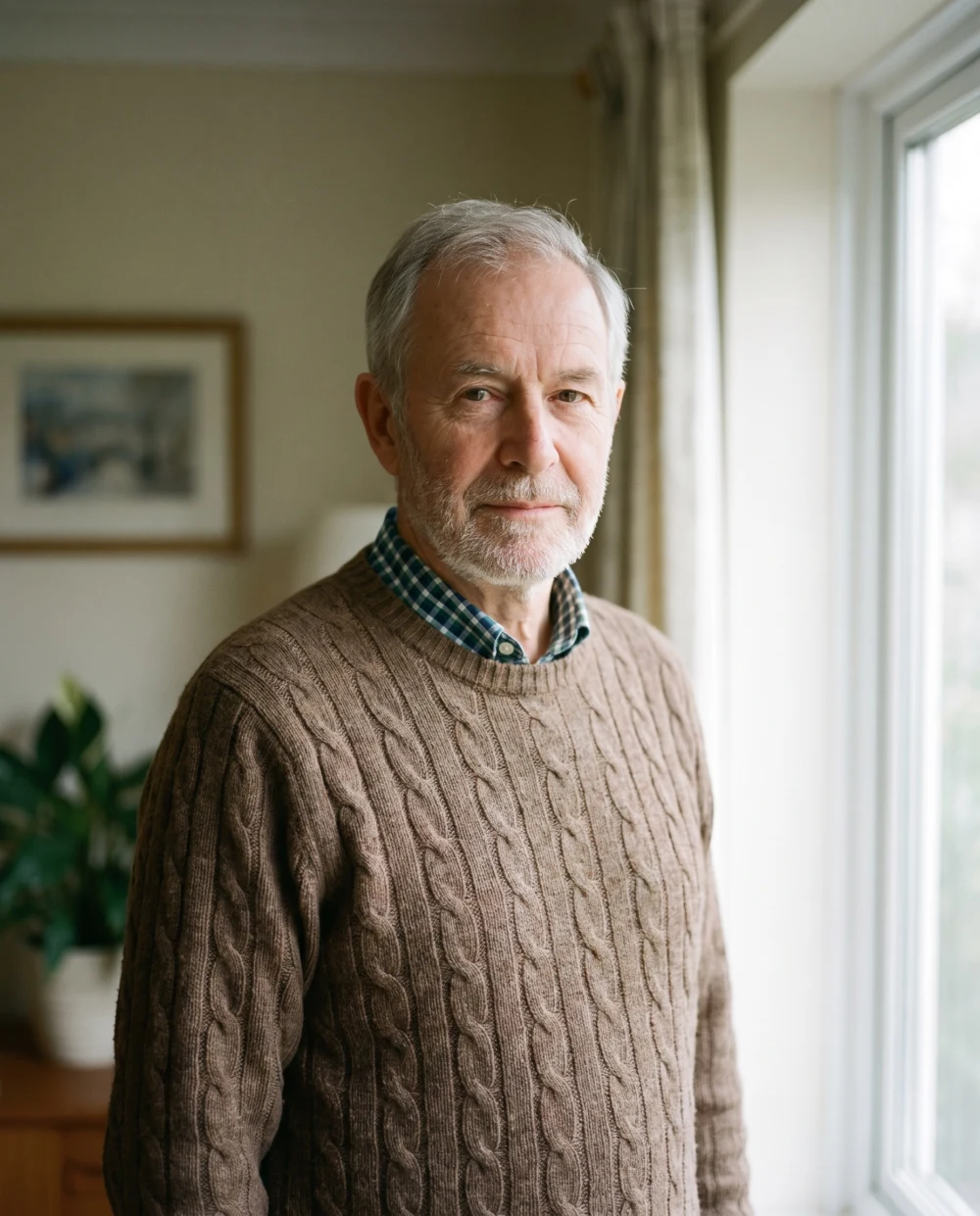
The bigger the format, the more it shows. A 60×90 cm portrait is looked at from half a metre away, so every detail of the face is on display. This is the one point in the whole order where the family really decides the result.

The short version: send a photograph taken from close by, with the figure framed from the waist up and the face turned towards the camera. Send several to choose from — it is usually the third one that has caught the expression best.

A man photographed from the waist up by a window — a good source photograph for a large memorial portrait
Works: waist up, the face to the camera, soft light from a window.
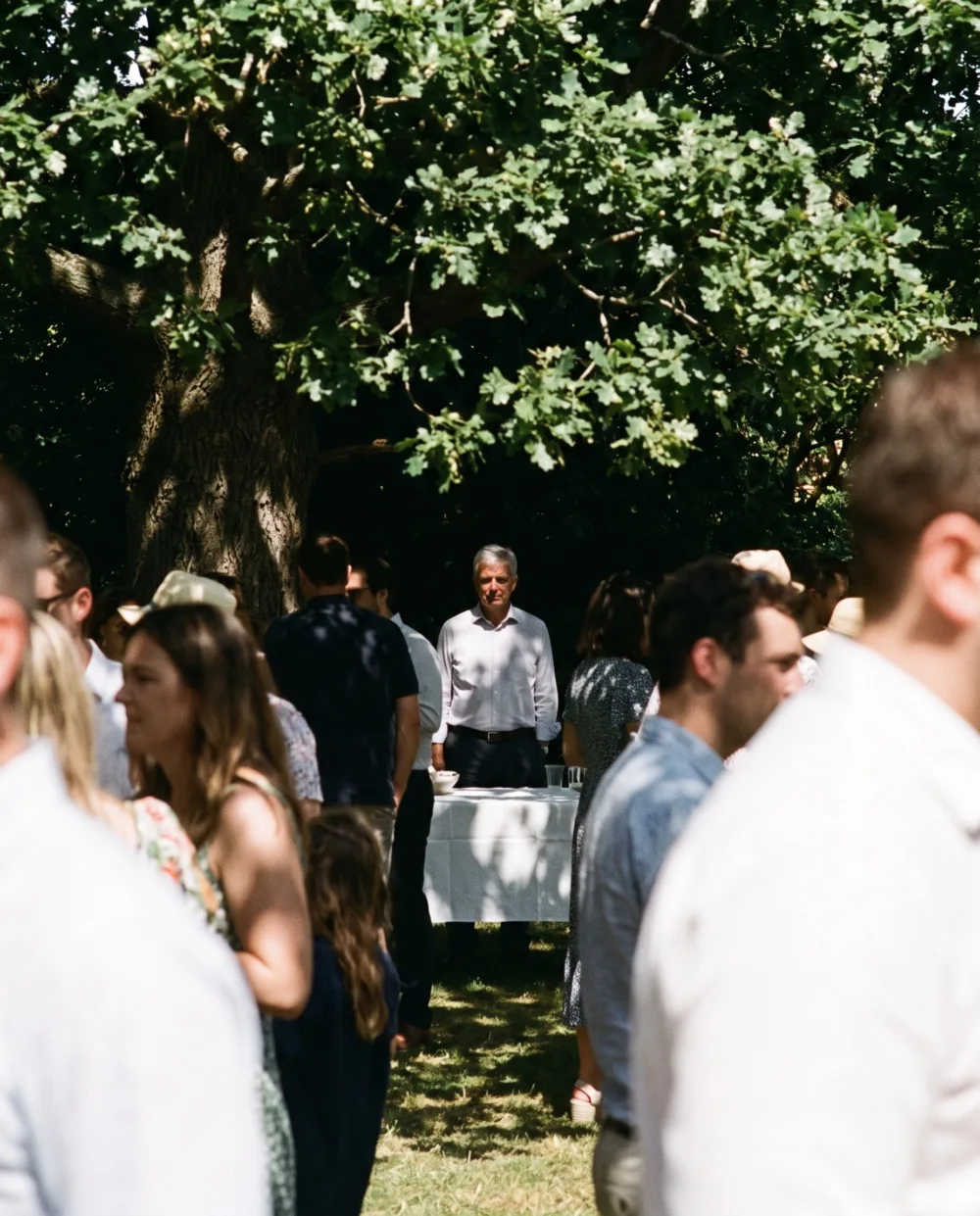
A garden party photograph: the man stands far back, his face small and shaded — a difficult source photograph
Difficult: the figure far off, the face small and shaded, harsh sun.
Works straight awayThe photographs we like
  • waist-up or head and shoulders,
  • the face turned to the camera, eyes open,
  • soft light — a window, shade, an overcast day,
  • a phone photograph from recent years, taken close up,
  • the original file, straight from the phone or camera.
Usually needs restoringWhere it gets harder
  • the figure standing far off, the face the size of a thumbnail,
  • harsh sun and hard shadows across the face,
  • a group photograph with one person to be cut out,
  • a crop that has been enlarged on a phone,
  • a picture already sent through a messaging app — it loses quality.

That last point matters more than it sounds. Messaging apps shrink photographs as they send them, so a file that reaches us by way of a chat is already poorer than the original. Send it by email straight from the phone’s gallery, to img@deseomemorials.com.

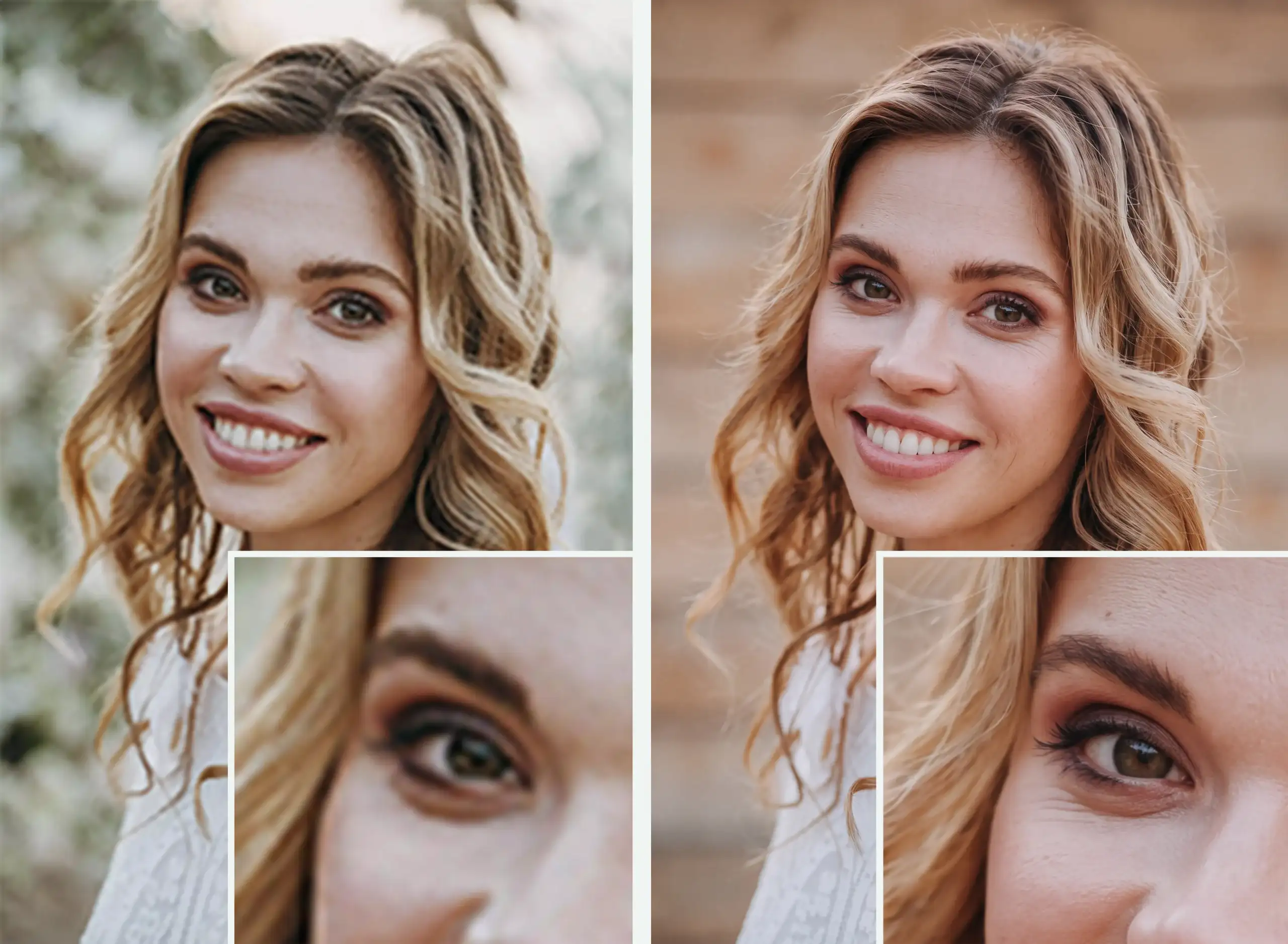
No good photograph? That is not the end of it. A passport picture, a face cut out of a wedding group or a frame paused on a video can all be used — we restore them to a standard that will stand up to a large format before the panel is made. What can and cannot be saved is in we have no good photo of the deceased.

A headstone photograph before and after restoration Original on the left, restored file on the right

Photo restoration
for headstones and funeral ceremonies

The service is for funeral homes, stonemasons and private individuals who need a photograph improved quickly — in time to have it printed by a local photographer for the ceremony, or prepared for use on a headstone.

We also restore photographs in very poor condition — we remove paper texture, grain and yellowing, bring back sharpness in the face and hair, and crop the frame to the format you choose. We hand over the print-ready file as a link you download to your computer.
Drag your photo hereJPG, PNG, WEBP, TIFF — up to 64 MB Choose file
€21,00
standard, within 72 hours
€39,00
express, within 24 hours
Go to the service

How to order, step by step

There are two routes, depending on who is building the memorial.

Through your memorial mason. While the memorial is being agreed, ask them to order and fit the panel. Between you, settle the size, the colour treatment and the method of fixing; the photographs go to the mason or straight to us. The invoicing then runs through the mason as part of the whole memorial.

Directly with us. You order the panel, give the size and the thickness, and we send the finished piece to the address you name — yours or the mason’s.

  1. Choose the design, the size and the thickness, or ask for a size to measure.
  2. Send several photographs by email to img@deseomemorials.com.
  3. Within two to three days you receive the design for approval — the crop, the lettering and the dates.
  4. Once approved we make the panel and send it packed for transport.

Making and delivery together normally take three to six weeks. Against a memorial that takes several weeks to build anyway, that fits without any rush — but it is not a solution for the day after tomorrow.

How a large panel is fitted

A large panel is fitted by the mason, and there is a good reason for that: a 50×70 cm sheet weighs several kilograms and glass moves with temperature. What counts is not the strength of the adhesive but the fact that the bond stays flexible.

  • A flexible adhesive, not a rigid mortar. Clear stonemason’s silicone or a flexible mounting adhesive — mirror adhesive among them — both work. A rigid bond that sets hard starts working against the glass at the first frosts.
  • The surface clean, degreased and dry. Old adhesive, stone dust and damp are the usual reasons a panel comes away after a few seasons.
  • The adhesive spread evenly. A bead along the edges and dabs across the middle, with no empty pockets for water to collect in.
  • Above freezing. Fit above 10°C, not in rain and not in frost.
  • Set into a base. If the memorial has a recess, the sheet drops into it and is supported from below — that is when the 20 mm glass is usually chosen.
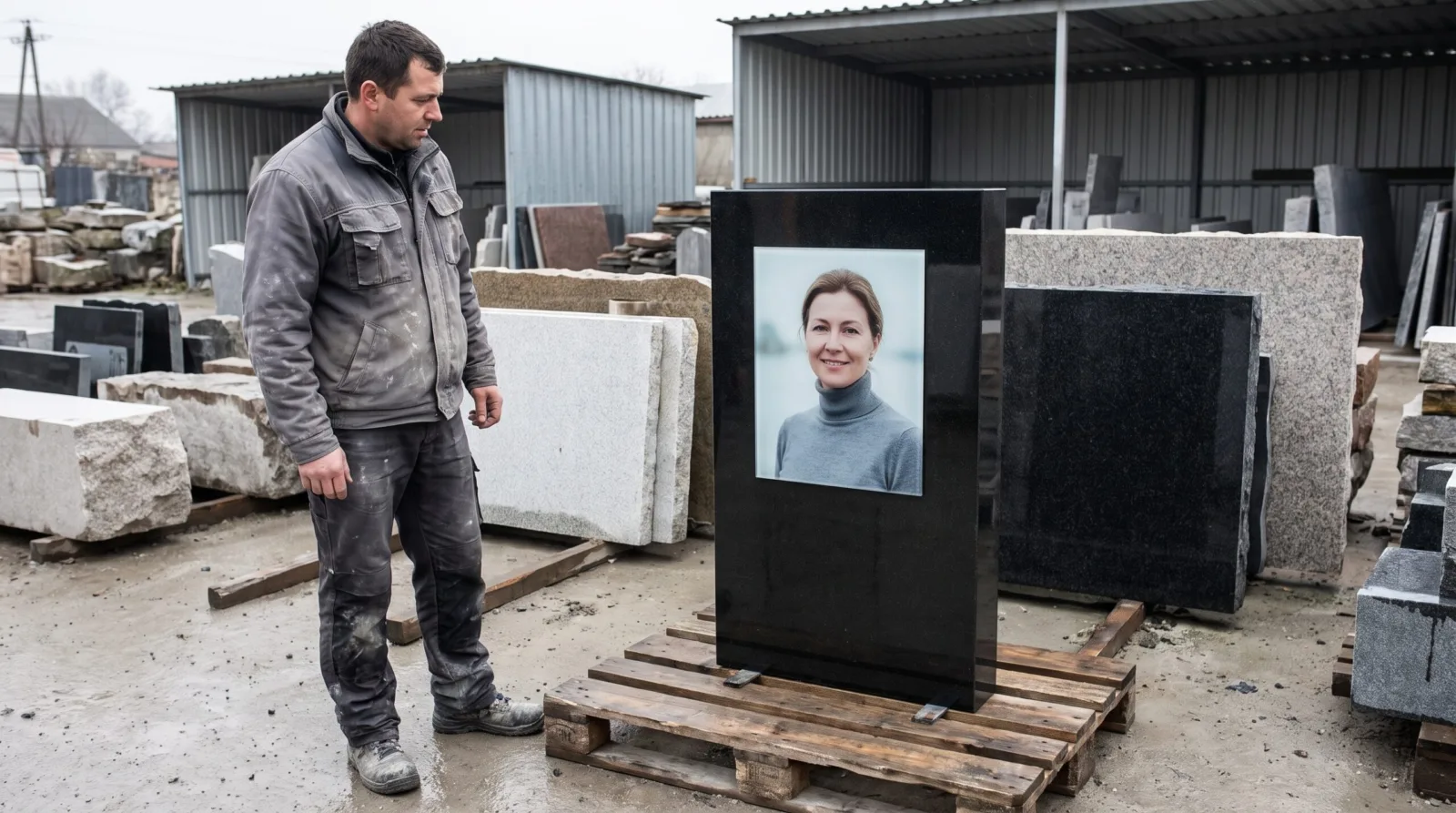
Craftsman fitting a tempered glass memorial plaque with photo onto a granite headstone
The finished panel is offered up to the slab and pressed home — the adhesive stays between the glass and the stone.

Why it lasts

Two different things account for the durability of a large panel, and they are worth separating.

The colour — the fired ceramic process. The image is not a print laid onto glass. Ceramic pigments are fired in a kiln and fuse into the glaze, becoming part of the sheet. Rain, frost and ultraviolet light have nothing to lift, so the portrait does not fade and does not craze at the edges the way a lamp-cured print can.

The sheet itself — tempered glass. Toughening raises the strength of glass several times over: against impact it takes four to five times more than ordinary glass of the same thickness, and the standard requires at least 120 N/mm² in bending against roughly 80 for annealed glass. If it ever does break, it falls into small blunt granules rather than sharp shards.

Day-to-day care is water, mild soap and a soft cloth. Scouring powders and acidic products stay in the cupboard.

For memorial masons

Large photographs are designed around working with masons — at this size somebody has to answer for the recess, the thickness and the fitting, and that is your part of the job. In practice:

  • settle the size and thickness before ordering, along with whether the panel goes on the face or into a recess,
  • for anything outside the five standard formats, give us the height and width and we will price it,
  • the design with the crop and the lettering comes back within two to three days, so you can show the family before production,
  • order as a business with a VAT number, and we send the finished panel to the workshop address,
  • if the family brought a poor photograph, we restore it before the panel is made — it is not a separate job to chase.

The terms of a standing arrangement are on our cooperation page.

Frequently asked questions

Will a large photograph fade in the sun?
No. The portrait is fired into the glaze, so the colour is part of the glass rather than a layer on it. That is the essential difference from lamp-cured printing.

What size suits a typical memorial?
40×50 cm on the upright face of a single memorial is the usual answer. 30×40 cm suits narrower slabs, and 60×90 cm large contemporary memorials.

Is the inscription included?
Yes, it is part of the panel — we lay out the lettering together with the crop of the portrait.

What if I only have one poor photograph?
We restore it to a standard that will hold up at a large size before the panel is made. If you are unsure, send the file to img@deseomemorials.com and we will answer before you order.

Can the panel be fitted without a mason?
We would advise against it. At this weight, and with one attempt at placing it, it is better done by someone with the right adhesive who will prepare the surface properly.

How long does it take?
The design comes back for approval two to three days after the photographs arrive; the whole order usually takes three to six weeks.

Do you make sizes outside the list?
Yes. Give us the height and the width and we will quote for a panel made to measure.

In short

  1. A large photograph is a glass panel carrying the portrait and the inscription, bonded to the slab or set into the base.
  2. Four designs, five formats from 20×30 to 60×90 cm, glass of 8 or 20 mm, and sizes made to measure.
  3. Send a close-up photograph, waist up, several to choose from — original files, not pictures passed through a chat.
  4. A poor photograph is restored before the panel is made.
  5. Fitting is on a flexible adhesive, onto a clean, degreased surface, best done by the mason.
  6. The design in two to three days, the whole order in three to six weeks.
Any questions?Get in touch with us

We will advise on the format and the thickness of the glass, suggest how to fix it to your particular memorial and price a panel made to measure.

+48 789 024 384biuro@deseomemorials.com
Share this article

← All posts