Headstone photo: porcelain, crystal or tempered glass

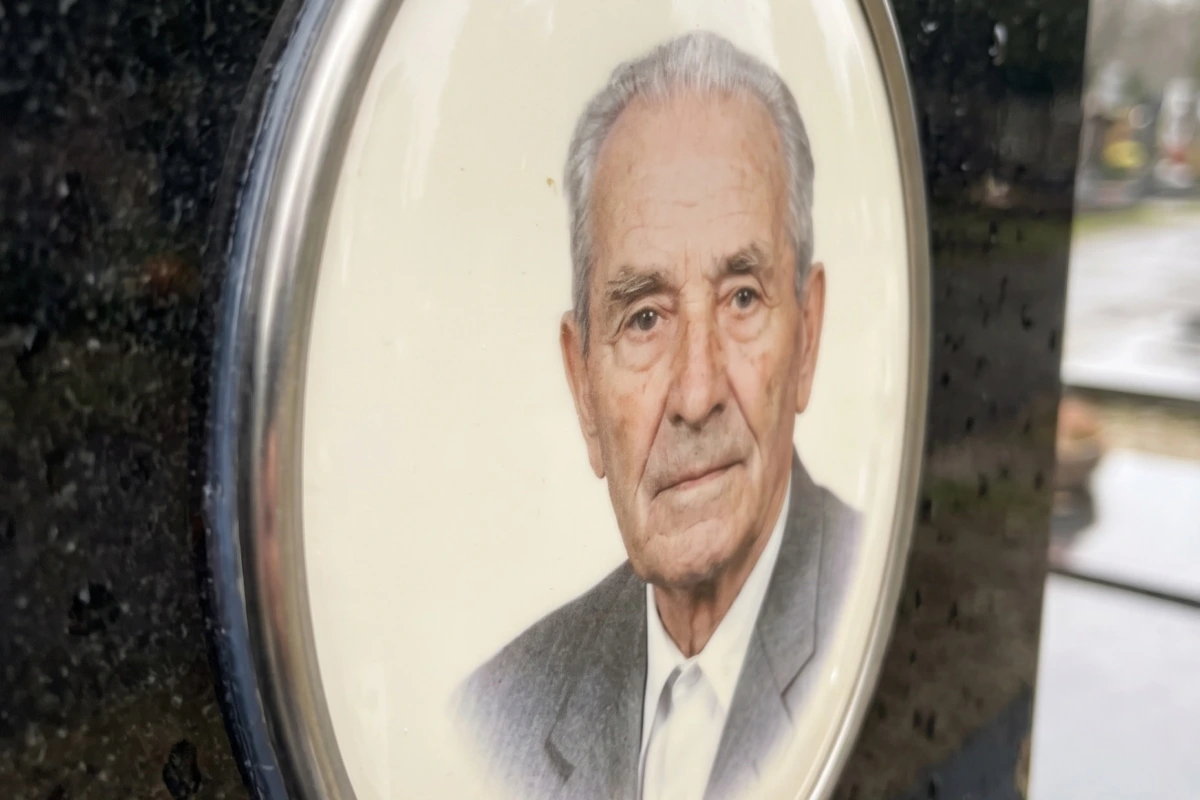
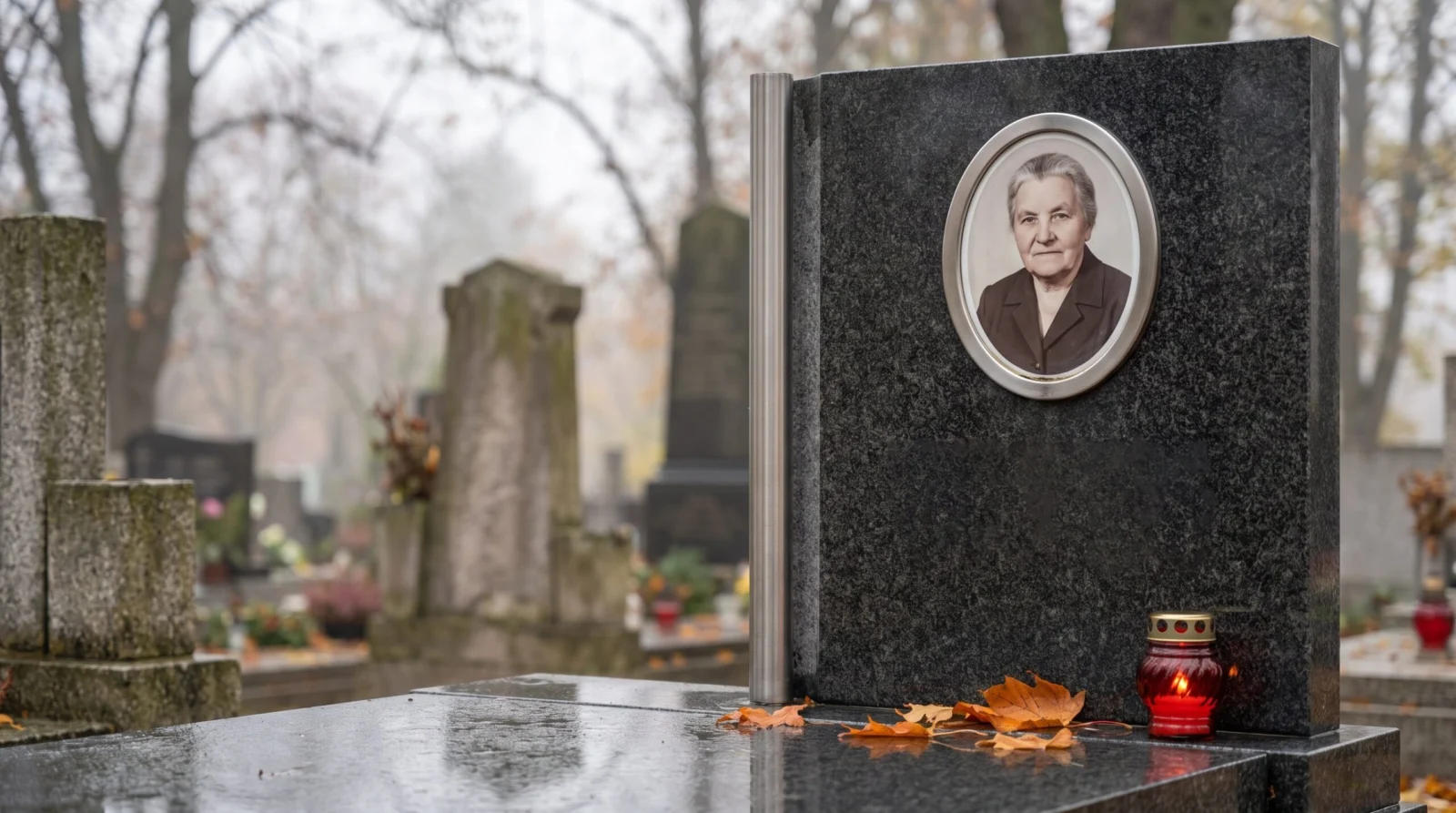
oval porcelain portrait for headstone mounted on granite memorial
Guide
Headstone photo: porcelain, crystal or tempered glass
Three materials that look alike on a screen and behave very differently after twenty years outdoors. What separates them, which to choose and how they are fitted.

Published 5 October 20269 min read
Contents

A headstone photo is made on one of three materials today: porcelain, crystal or tempered glass. On a screen they look much the same. They differ in price, in how they are fitted, and in how they look twenty years later in an English churchyard or cemetery.

Below we explain what separates them, which we recommend for what, and how long they last. We also cover the thing that matters more than the material itself — how the image is made — and the fitting, because that is usually what decides whether the portrait stays on the stone.

The three materials at a glance

The short version, before the detail:

ClassicPorcelain
  • oval or rectangular,
  • from 4×6 cm to 18×24 cm (1.6″×2.4″ to 7″×9.5″),
  • warm white, gentle gloss,
  • thin, sits flush against the stone.
ContemporaryCrystal
  • thick glass with polished edges,
  • from 8×10 cm to 18×24 cm,
  • stands off the stone and catches the light,
  • fitted without drilling.
Large formatTempered glass
  • from 20×30 cm up to 60×90 cm,
  • 8 mm or 20 mm thick,
  • for large portraits and glass memorial panels,
  • fitted by your memorial mason.

More important than the material: how the image is made

Two headstone photos can look identical in a catalogue and completely different after a few summers outdoors. What decides it is the process.

Fired ceramic. The image is laid down in ceramic pigments and then fired in a kiln at several hundred degrees. The pigment fuses into the glaze and becomes part of the material — it is inside the glass, not sitting on top of it. Rain, frost and sunlight have nothing to lift, so the colours hold for decades. Every headstone photo we make is fired this way: on porcelain, on crystal and on tempered glass.

UV printing. A printer lays ink onto the surface and lamps cure it there. It is quicker and cheaper, and indoors — in a memorial frame or on a keepsake — it looks good. Outdoors the problem is that it remains a layer on top. After some years in full sun the colours lose depth, and along the edges the layer can lift or craze. It shows first on stones that face south with no shade at all.

How to check before you order. Ask one question: is the photo fired in a kiln, or printed? That settles it. Ask as well whether the colour guarantee is given in writing.

The photo on porcelain

The classic choice, and the one most families picture when they say “a photo for the headstone”. An oval or a rectangle, the warm white of porcelain, a gentle gloss, and either a thin steel frame or no frame at all.

  • Sizes: from 4×6 cm to 18×24 cm, in colour or black and white.
  • Look: the plaque sits flush against the stone, so the portrait reads as part of the memorial rather than an addition to it.
  • Best for: traditional memorials, light and dark granite, family graves with several portraits side by side.

Check the regulations first. Churchyards are usually the strictest and many do not allow photographic plaques at all. Council and private cemeteries are more often willing, but they may set a maximum size — 9×12 cm is a common limit — and ask for a plain frame rather than an ornate one. Permission has to be applied for before any work begins, and your memorial mason normally submits it for you.

Oval porcelain portrait for headstone mounted on granite gravestone
A photo on porcelain: a thin plaque in a steel bezel, sitting flush against polished granite.

The photo on crystal

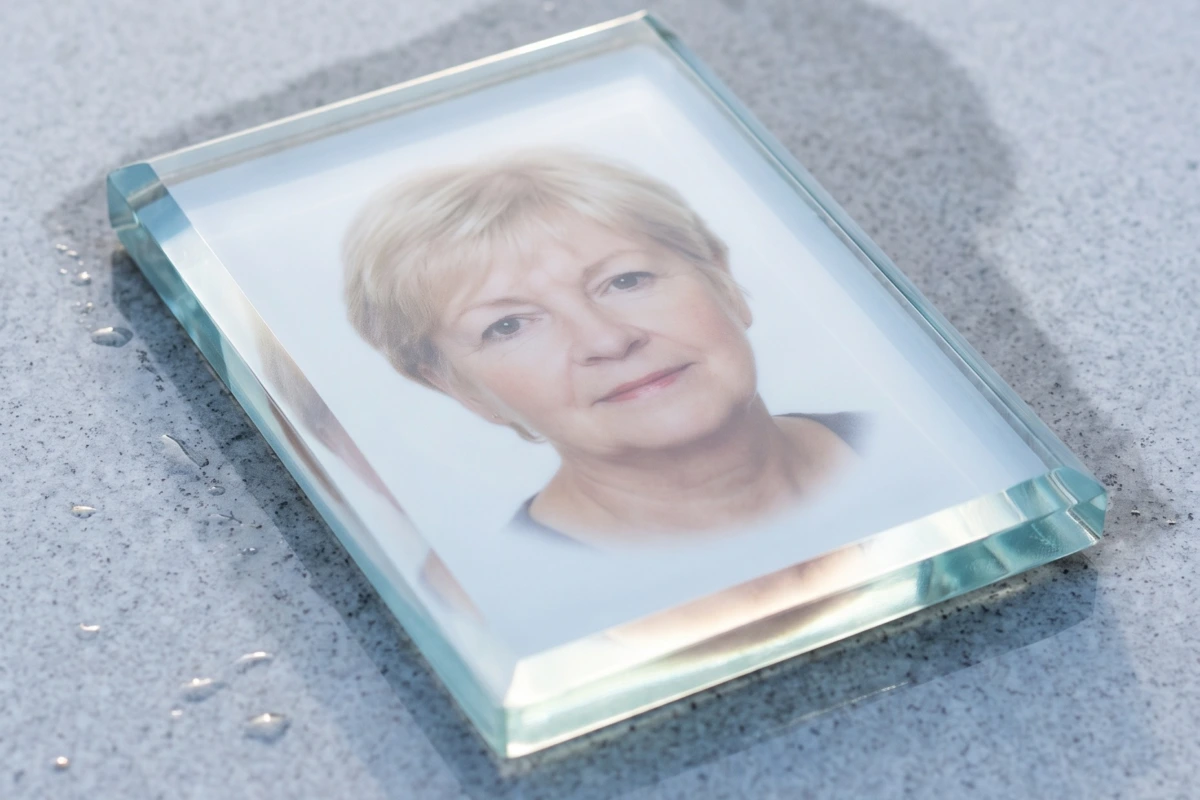
The same fired image, this time on thick glass with polished edges. Crystal stands proud of the stone, catches daylight along the ground edges and throws its own shadow onto the granite, so the portrait looks lifted away from the surface. It suits contemporary memorials and dark polished granite particularly well.

  • Sizes: from 8×10 cm to 18×24 cm, oval and rectangular, colour or black and white.
  • Fitting: double-sided mounting tape, with no holes drilled in the memorial.
  • Best for: modern designs, polished stone, families who want something other than the traditional oval.
Rectangular memorial photo on crystal with polished edges, resting on granite
Crystal with polished edges throws its own shadow onto the stone — hence the sense of depth.

Large photographs on tempered glass

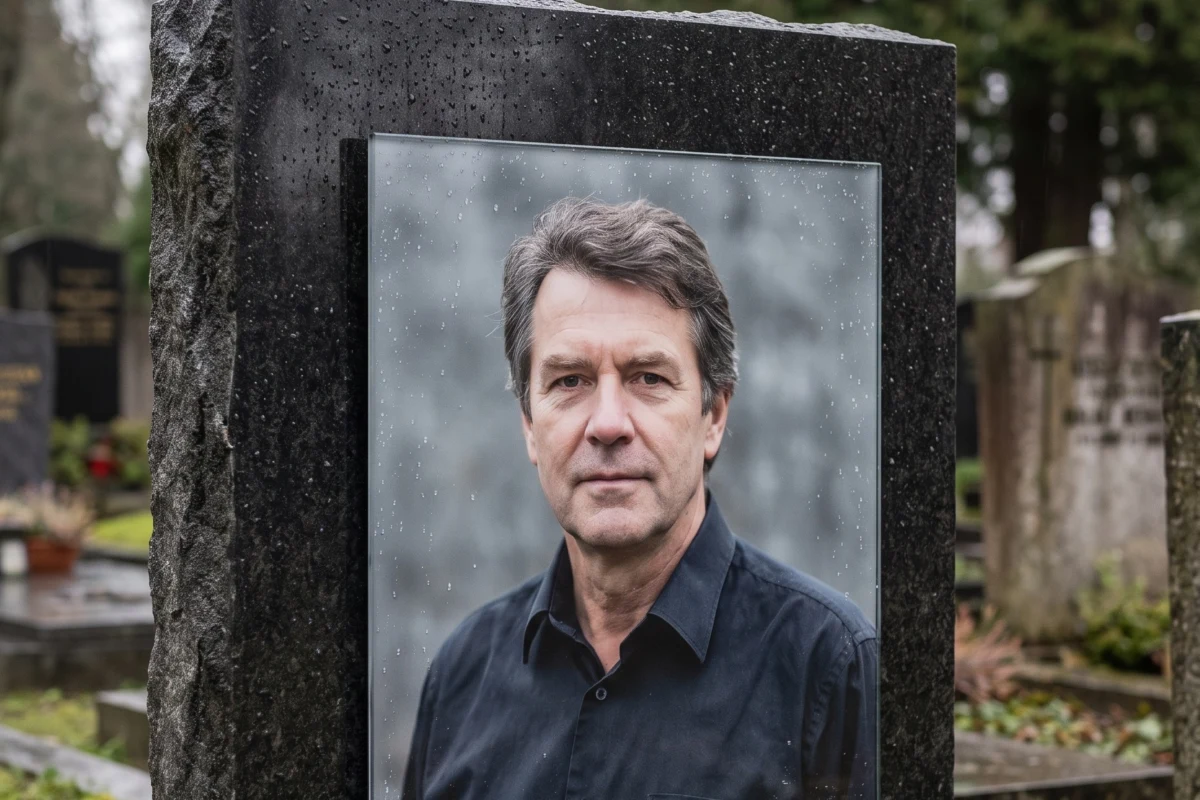
When the portrait is meant to be the memorial rather than a detail on it, the answer is tempered glass in a large format. We make these in the same fired ceramic process, on ultra-white glass, and back them with a second layer of glass and a lamination, so the image is protected from both sides.

  • Sizes: from 20×30 cm to 60×90 cm, in 8 mm or 20 mm thickness.
  • Where it works: the upright face of the memorial, the base, or a glass memorial panel carrying the portrait.
  • Worth knowing: agree the size, the thickness and the method of fixing with your memorial mason first — a 20 mm panel is a very different weight from an 8 mm one.
large colour photo for headstone mounted on black granite grave
A large portrait on tempered glass set into the upright face of the memorial.

What we recommend, and when

Four situations, without the theory:

  • A traditional memorial and a classic portrait. Porcelain, an oval around 13×18 cm — or 9×12 cm where the cemetery sets a limit.
  • Dark polished granite and a contemporary design. Crystal. The shadow under the glass and the polished edges make a difference that never shows in an online photograph.
  • The portrait is the memorial. Tempered glass, from 30×40 cm upwards, after a conversation with your memorial mason.
  • A child’s grave, or something gentler. A small artistic photograph with a floral composition around the portrait, on porcelain or on crystal.

Before you settle on a size, measure the space on the stone and check the burial ground’s regulations — the rules differ between a churchyard, a council cemetery and a private one.

How long it lasts

A fired image does not fade in sunlight and does not wash out in rain: the pigment is in the glaze, not on it. Ceramic portraits on older graves are decades old and still hold their colour. The problems that do happen come from somewhere else:

  • Impact. Porcelain and glass are hard but brittle. The usual reason for a replacement is a dropped tool or an accident during tidying, not the passing of time.
  • Poor fitting. If water gets behind the plaque and freezes, it can lift the photograph off the stone. That is why the adhesive goes on evenly, with no empty pockets.
  • Harsh cleaning. Scouring powder, wire wool and acidic products dull the surface. Water, mild soap and a soft cloth are enough.

Fitting: mounting tape or adhesive

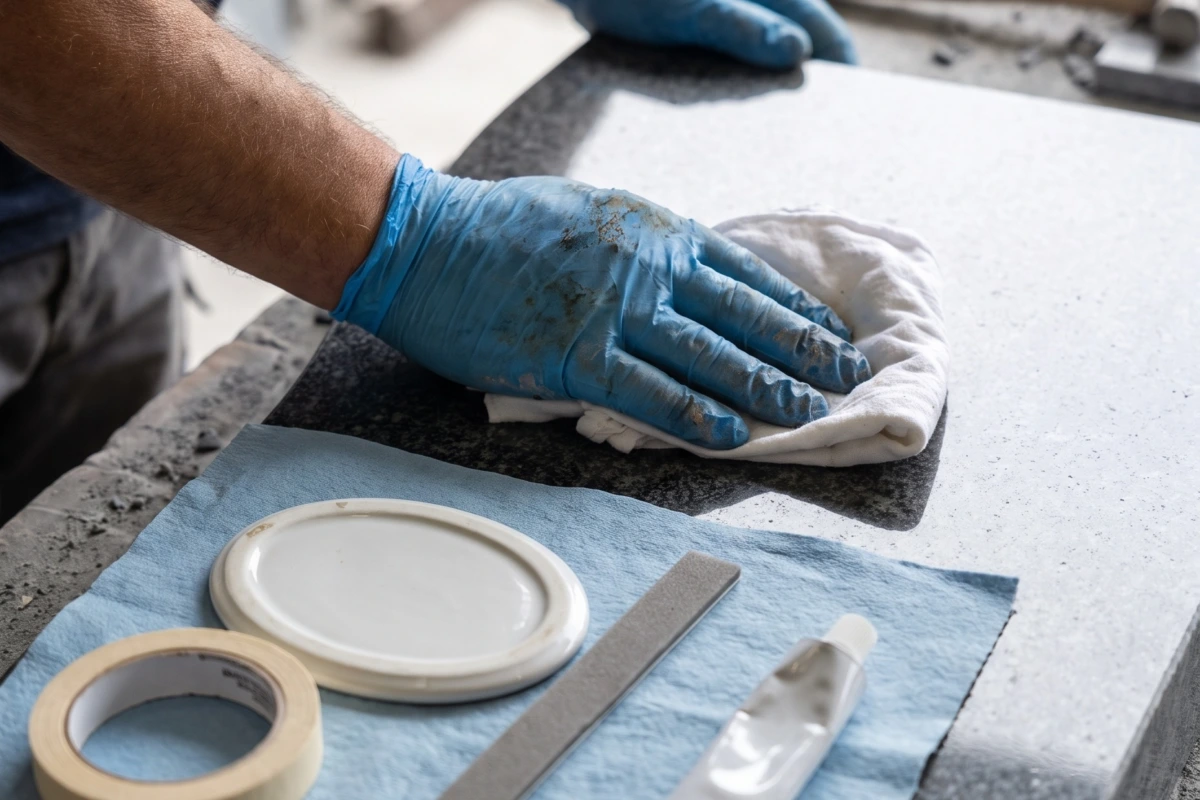
Most often the memorial mason fits the photograph along with the memorial itself. If you are doing it yourself — with a small plaque it is a quarter of an hour’s work — what matters is the preparation, not the adhesive.

The preparation is always the same:

  1. Wash the spot and remove any old adhesive or silicone.
  2. Degrease it — isopropyl alcohol, or surgical spirit and water half and half.
  3. Wait until the stone is completely dry.
  4. Work above 10°C, and never in rain or frost.

Crystal and glass — 3M mounting tape. Double-sided foam tape holds the glass without drilling and is all but invisible once fitted. Peel the backing, line the photograph up exactly where it belongs and press it home firmly and evenly — once it is down it cannot be moved. The tape reaches most of its strength after a day and its full strength after three.

Porcelain — a flexible adhesive. Clear stonemason’s silicone or a flexible mounting adhesive, mirror adhesive among them, both work. Run a bead around the whole edge of the plaque about 5 mm in, add a dab in the middle, press it down so there are no voids, and hold it with masking tape for twenty-four hours while the adhesive cures.

Leave the large formats to the mason. A 40×50 cm or 60×90 cm panel has real weight and is usually set into the stone rather than simply bonded to the face of it.

oval porcelain portrait for headstone being mounted on granite
Before fitting, the surface has to be clean, degreased and dry.

Which photograph to send us

No material and no process will rescue a poor original. What works best is a photograph where the face is sharp and turned towards the camera, taken from a short distance. The background does not matter — we build a new one anyway.

Once your pictures reach us we prepare a portrait design for approval within two to three days. The whole order, made and delivered, normally takes three to six weeks, so it is worth ordering the photograph together with the memorial rather than at the last minute.

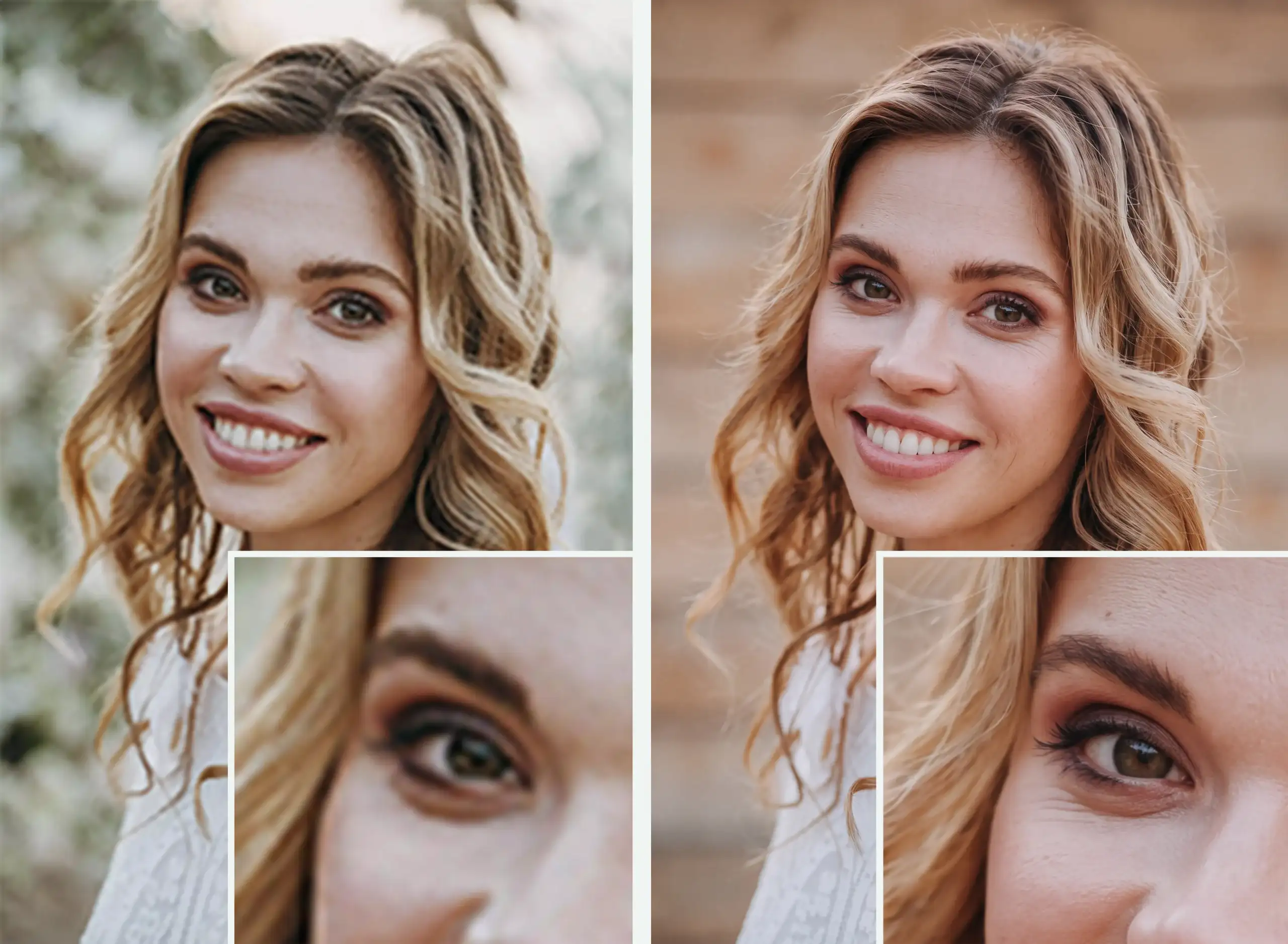
A headstone photograph before and after restoration Original on the left, restored file on the right

Photo restoration
for headstones and funeral ceremonies

The service is for funeral homes, stonemasons and private individuals who need a photograph improved quickly — in time to have it printed by a local photographer for the ceremony, or prepared for use on a headstone.

We also restore photographs in very poor condition — we remove paper texture, grain and yellowing, bring back sharpness in the face and hair, and crop the frame to the format you choose. We hand over the print-ready file as a link you download to your computer.

Drag your photo hereJPG, PNG, WEBP, TIFF — up to 64 MB Choose file
€21,00
standard, within 72 hours
€39,00
express, within 24 hours
Go to the service

If the only picture you have is old, blurred or cut out of a larger frame, we can improve it before the portrait is made — you choose the restoration option while ordering the photograph. We write about it separately in how to improve the quality of a photo and we have no good photo of the deceased.

For memorial masons and funeral directors

Families ask about the photograph while they are ordering the memorial, so the decision about the material is usually made in front of you. A few things that make that conversation easier:

  • porcelain and crystal up to 18×24 cm can be fitted on site, with no work to the stone,
  • for large formats agree the size, the thickness and the fixing before ordering — a 20 mm panel is a different weight from an 8 mm one,
  • you order as a business with a VAT number, and the design comes back for approval in two to three days,
  • if the family brought a poor photograph, restoration is an option on the order rather than a separate job,
  • check the burial ground’s regulations before you promise a size — churchyards and cemeteries differ.

The terms of a standing arrangement are on our cooperation page.

Frequently asked questions

What is the difference between a fired ceramic photo and a UV print?
In the ceramic process the image is fired in a kiln and fuses into the glaze, so the colour sits inside the material. A UV print is a layer of ink cured on the surface — outdoors, over the years, it loses depth and can lift.

Will the photograph fade in the sun?
A fired one will not. The pigment is part of the glaze and there is nothing to bleach. That is why ceramic portraits from decades ago still hold their colour.

Are photographs allowed on headstones in the UK?
It depends on the burial ground. Many churchyards do not permit them; council and private cemeteries often do, sometimes with a maximum size such as 9×12 cm and a plain frame. Permission is applied for before the work, usually through your memorial mason.

What size should we choose?
13×18 cm suits a typical memorial, and 9×12 cm where space is tighter, where several portraits sit side by side, or where the cemetery sets a limit.

Can I fit the photograph myself?
With small formats, yes. The surface has to be clean, degreased and dry; crystal goes on mounting tape and porcelain on a flexible adhesive. Leave large panels to the mason.

How long does it take?
The portrait design is ready two to three days after your pictures arrive, and the whole order usually takes three to six weeks.

We only have one poor photograph. Can it be used?
Usually yes. Restoration is an option you choose while ordering; if you are unsure, write to us and attach the file, and we will answer before you order.

In short

  1. Start with the process: ask whether the photograph is fired in a kiln or printed.
  2. Porcelain — the classic, 4×6 to 18×24 cm, at home on almost any memorial.
  3. Crystal — the same fired image on thick glass, contemporary, with a shadow on the stone.
  4. Tempered glass — large formats up to 60×90 cm, agreed with your memorial mason.
  5. Check the burial ground’s rules on size and frame before you order.
  6. Fitting: clean, dry, degreased; crystal on 3M tape, porcelain on a flexible adhesive.
Share this article

← All posts