How to honour a colleague who has died
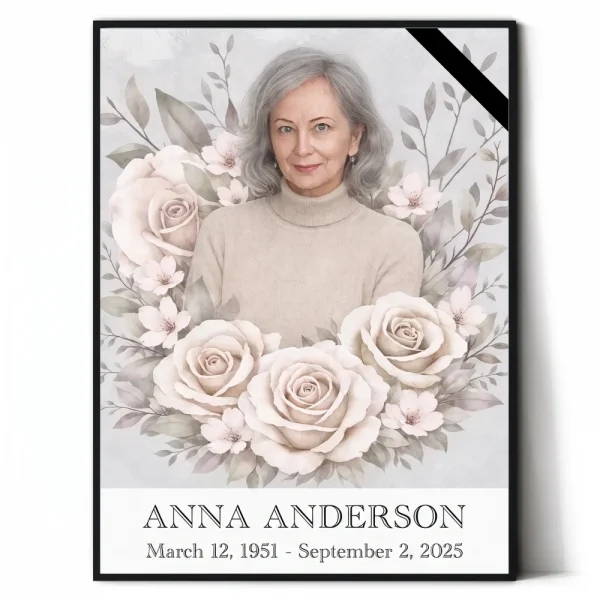
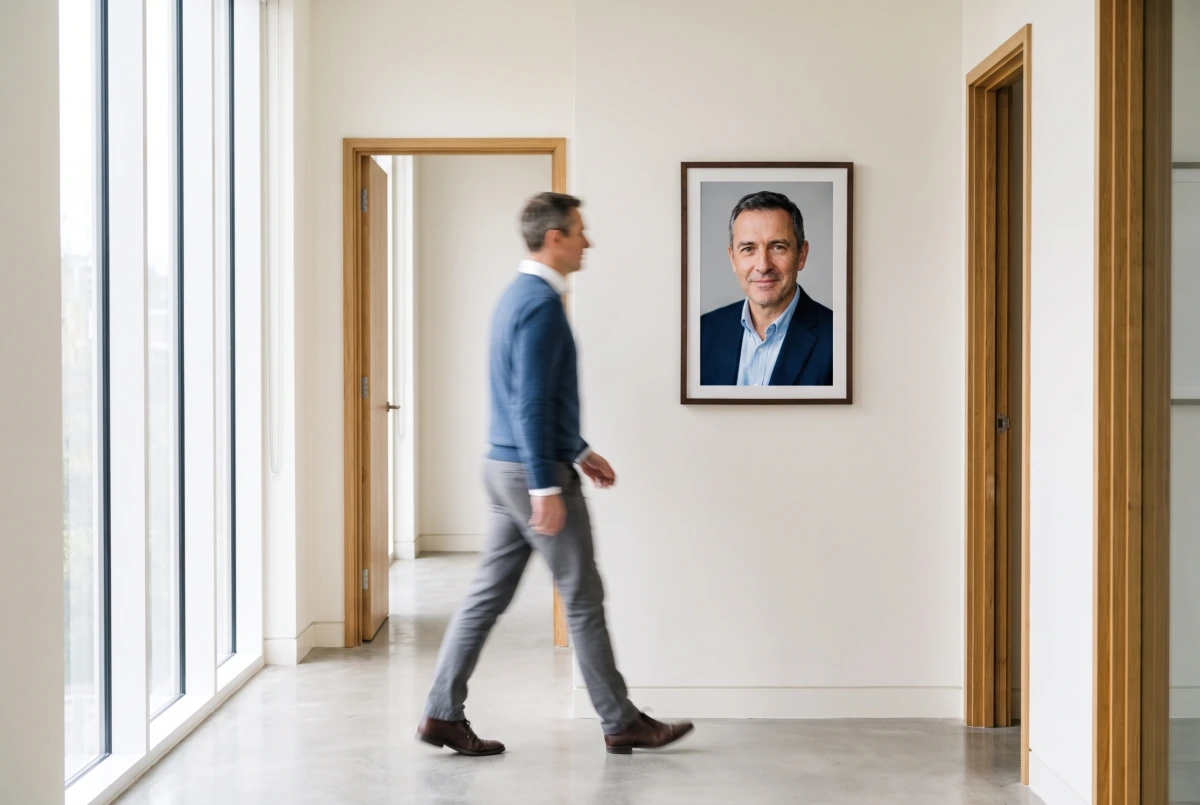
A framed portrait where the team walks past every day — the simplest gesture that does not turn an office into a chapel. How to prepare it and where to hang it.
Somebody on the team dies. For the first few days everyone knows what to do: condolences, flowers, somebody goes to the funeral. Then Monday comes round, the desk is empty, and a question arrives that no company has a ready answer for — whether, and how, to mark the loss of somebody who worked here for fifteen years.
There are usually two fears. That the company will do too little and the team will read it as indifference, or that it will do too much and end up with a shrine by reception. This piece is about finding the ground in between — and about the simplest thing that works in most workplaces: a framed portrait hung where people walk past every day anyway.
When to do it
Against the instinct — not straight away. In the first week the team is in shock and every gesture lands heavily. A portrait hung three days after the funeral can overwhelm people who sit opposite an empty chair.
- The first days: condolences to the family, a plain message to the team, attendance at the funeral. Nothing more is needed.
- After two or three weeks: a good moment to speak to the family and decide about a portrait.
- The first anniversary: a natural point if the early weeks felt too raw. Many companies hang the portrait then.
If it was a partner, a founder or somebody who spent decades with the firm, nobody usually doubts that a memorial is due. With a shorter service, simply ask the team whether they would want one.
Speak to the family first
This is the one step not to skip. A portrait of somebody’s husband or mother hanging in a place the family knew nothing about can hurt more than a company expects.
The conversation is short and can be had by phone or in a letter. Three things to settle:
- Whether they are happy with it. Usually yes — and it usually matters to them that somebody at work remembers.
- Which photograph. Ask for two or three to choose from. The family often has something better than the picture on the staff pass.
- Whether they would like the same portrait for themselves. Any number of copies can be made from one prepared file, so a second frame costs only the print and the frame.
If the family would rather not, that is the end of it. Somebody can still be remembered in other ways: an entry in the company’s records, a line in the annual report, or simply nobody taking their desk for a while.
Where to find the photograph
Most companies have several options and it is worth going through them before asking the family:
- A photograph from a staff shoot — the best starting point if one exists. Usually sharp, well lit, and showing the person as the team knew them.
- The picture from a staff pass or the website. Often too small to enlarge, but enough to settle the crop.
- A photograph from a works party, a long-service award or a Christmas do. Frequently the best expression — one person simply has to be lifted out of a group.
- A photograph from the family. Always worth asking; they know pictures nobody at work has seen.
One caution about pictures taken from a website: a file downloaded from the web is usually a thumbnail and falls apart when enlarged to 30×40 cm. If the original is with a photographer or in the HR files, ask for that instead. How to recognise a good file is covered in taking photographs in.
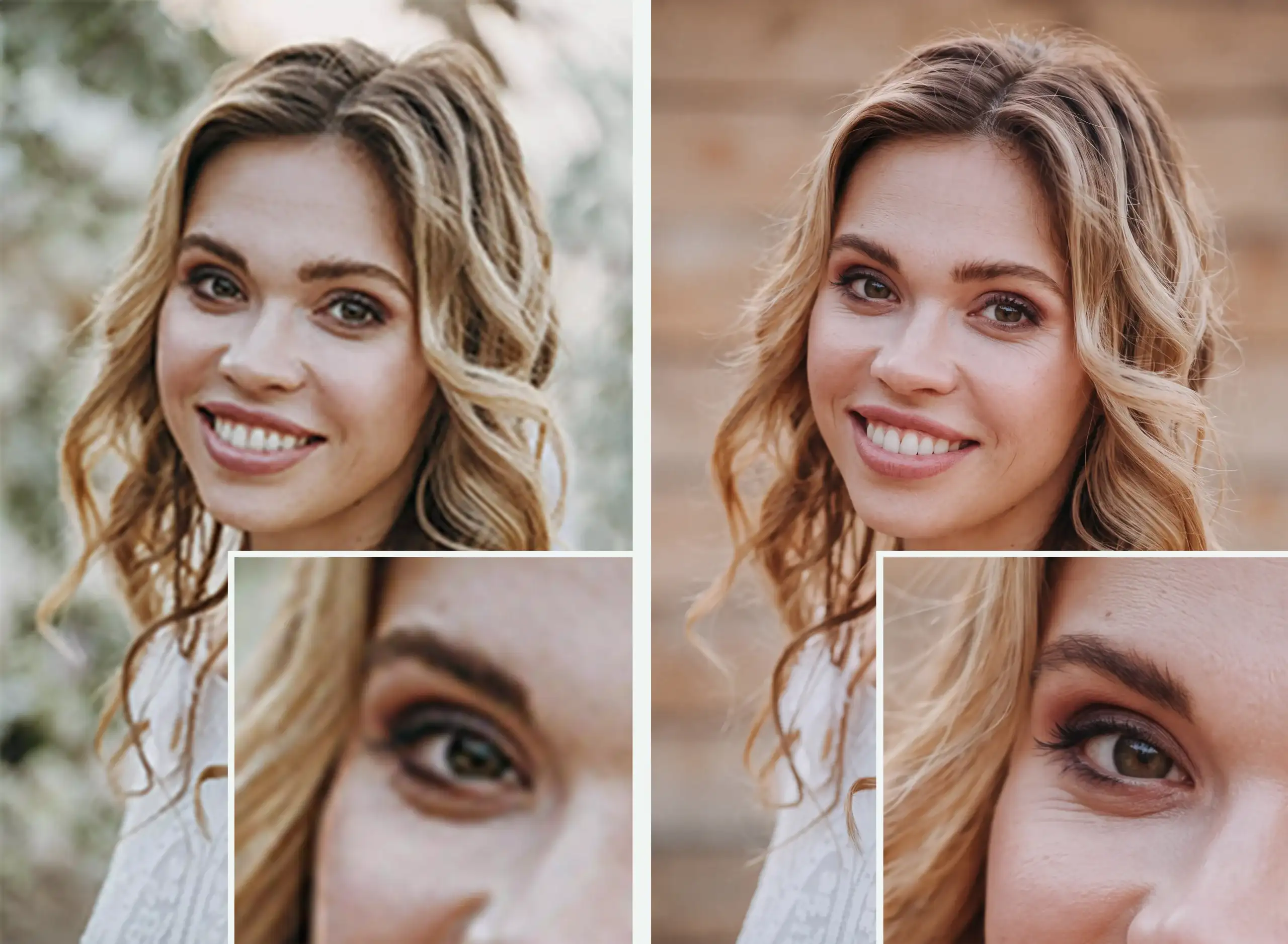
If all that is left is a weak photograph — a face cut out of a group shot, or an old print — we restore it before the portrait is made: €21,00 within 72 hours, €39,00 express within 24 hours, invoiced to the company.
Original on the left, restored file on the right
Photo restoration
for headstones and funeral ceremonies
The service is for funeral homes, stonemasons and private individuals who need a photograph improved quickly — in time to have it printed by a local photographer for the ceremony, or prepared for use on a headstone.
We also restore photographs in very poor condition — we remove paper texture, grain and yellowing, bring back sharpness in the face and hair, and crop the frame to the format you choose. We hand over the print-ready file as a link you download to your computer.
Which portrait to choose
An office calls for something calm and without the marks of mourning. This is not the picture from the funeral moved into the workplace.
- Size. 30×40 cm suits a corridor or reception; 20×30 cm is enough on a narrower wall or in an office. The largest, 40×50 cm, is usually kept for founders and partners.
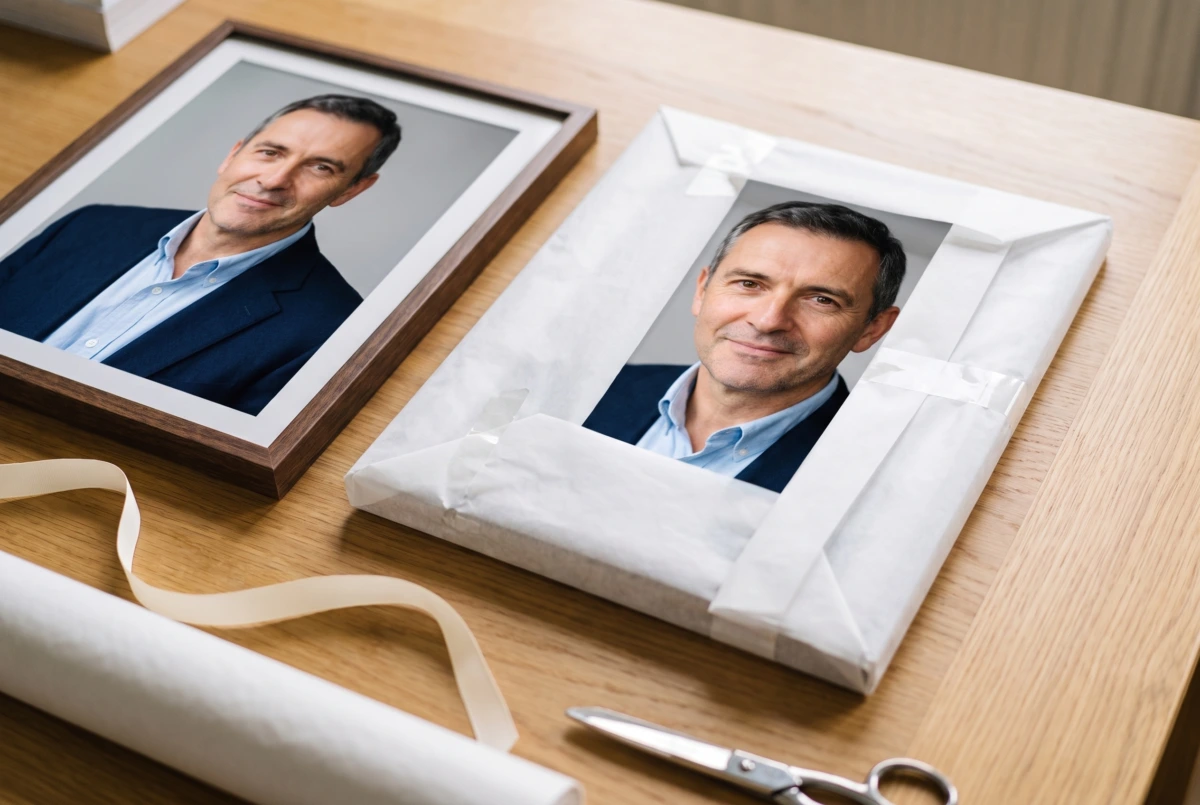
- Frame. Plain and dark, slim or wider. No ornament and no gilt — it should suit the building, not a chapel.
- No black ribbon. The ribbon belongs to the funeral. In an office, where the portrait hangs for years, it is better left off — or taken away after a few weeks.
- Colour or black and white. Colour is warmer and closer to how the team remembers the person. Black and white suits a building that already has a wall of pictures in that style.
- Matte paper. Corridors and receptions carry a lot of light; matte does not throw back the lamps and the windows.
Portraits come in four sizes — 13×18, 20×30, 30×40 and 40×50 cm — in the memorial pictures category. There is also a digital version: the print-ready file on its own, if you would rather print and frame locally.
Where to hang it
The place decides whether the portrait becomes a natural part of the office or an awkward spot everyone avoids looking at.
Places that work:
- A corridor or a hallway — somewhere people pass through, every day, without stopping.
- Reception, if there are already photographs or a company history board there.
- A meeting room, particularly for partners and founders.
- A wall telling the company’s history — if one exists, the portrait belongs there most naturally.
Places to avoid:
- above a desk that somebody else will take,
- in the room where that person’s own team sits, at least for the first months,
- in the kitchen or the break room, where people come to switch off,
- facing the entrance if you receive clients — it puts visitors in an awkward position.
Nothing has to stand underneath. If you would like something, a small vase with a single stem, changed now and then, is enough. Candles belong at the graveside.
What else a company can do
The portrait is the simplest and most lasting gesture, but rarely the only one. What companies most often do, and what costs little:
- A short note to the team written by somebody who knew them, not by HR.
- A small plaque with the name and the years of service beside the portrait — two lines, no grandeur.
- Naming a room or a workshop after them, if they were with the firm a long time.
- A memorial bench or a tree — in Britain still the most familiar gesture of all, and one the family can visit.
- A collection for a charity they cared about, agreed with the family first.
- A second copy of the portrait for the family, handed over in person rather than posted.
What not to do: large memorial boards without the family’s agreement, collections announced to the whole company before the family knows, and social media posts using a photograph the family has never seen.
How to order it
The whole thing takes a few days and is arranged online:
- Choose the photograph — from the company or from the family, ideally two or three to pick from.
- If the picture is weak, order the restoration: €21,00 within 72 hours or €39,00 express within 24 hours.
- Order the portrait in the size you want, framed or as the file alone. If you want two copies, say so on the order.
- The design comes back for approval within 24 hours; printing and framing take 2–3 working days plus delivery.
Order on the company’s details with a VAT number and it goes on the invoice. Keep the restored file — it will be wanted if somebody asks for another copy or a smaller size a year from now. How one file covers everything is in one photograph, many uses.
Frequently asked questions
Do we have to ask the family?
Yes. It is the one step worth never skipping — not least because the family usually has a better photograph than the company.
What size suits a corridor?
30×40 cm in most cases. 20×30 cm on a narrower wall, 40×50 cm for founders and partners.
Should the portrait have a black ribbon?
In an office, better not. The ribbon belongs to the funeral; a portrait at work hangs for years and should not be a mourning sign.
All we have is a small picture from the website. Is that enough?
Usually not at 30×40 cm. Look for the original with the photographer or in the HR files; if there is none, we will restore what there is.
How long does it take?
The design comes back within 24 hours, printing and framing take 2–3 working days plus delivery. Add a day for express restoration.
Can we order two identical portraits?
Yes, and it is the commonest choice: one stays in the office, the other goes to the family. Both come from the same file.
Will we get an invoice?
Yes. Order on the company name and VAT number.
We are not sure our photograph will do.
Send it through the contact form and we will answer before you place an order.
In short
- Wait two or three weeks — in the first days, condolences and being at the funeral are enough.
- Speak to the family: their agreement, the choice of photograph, a second copy if they want one.
- Find the best file you can; a weak photograph is restored before the portrait is made.
- Choose a plain dark frame, matte paper and 30×40 cm, with no black ribbon.
- Hang it where people walk past every day, not above somebody’s desk.
Recommended products
Any of these can be made from one prepared file:
We will advise on the size and the framing, look at the photograph before you order and invoice the company.
+48 789 024 384biuro@deseomemorials.com
A portrait for the office
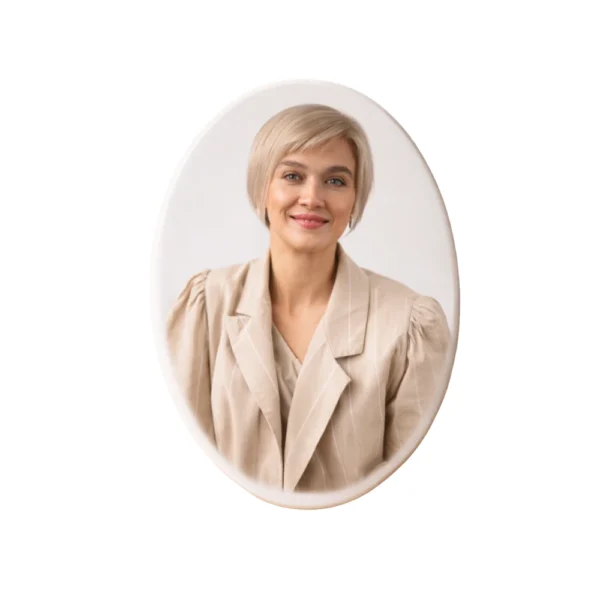
Porcelain photos
Crystal photos
Large memorial photos